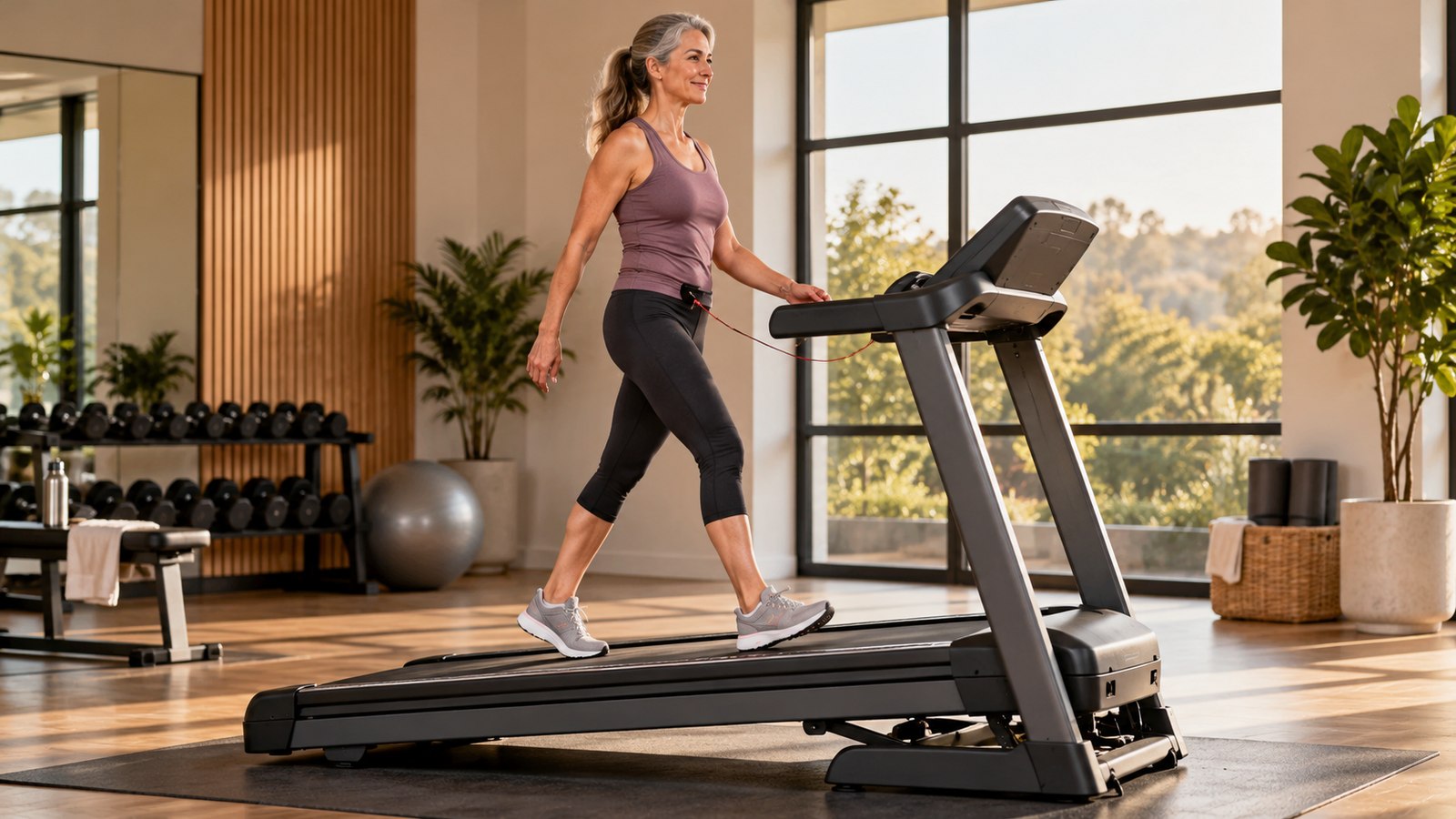
Lifters: How Long Should I Do Zone 2 Cardio? 30 to 60 Minutes a Session
Plan on 30 to 60 minutes per zone 2 session and about 150 minutes across the week. Start at 30 minutes, then stretch one session to 45-60 minutes over time.

Thirty minutes at an easy, steady effort is already a full session. How long should I do zone 2 cardio? Two numbers: one per session, one per week.
Defined Fitness says many people see progress with 30 to 60 minutes per session. The same guide puts weekly goals for moderate cardio at around 150 minutes across the week.
Stop and get checked if aerobic exercise brings on dizziness, chest pain or pressure, or nausea. The National Institute on Aging says aerobic activity should not cause any of these.
The Short Answer: 30 to 60 Minutes a Session, About 150 Minutes a Week
Plan around both numbers. The session range tells you how long to stay on the bike, trail or rower today. The weekly figure tells you whether the week added up.
At the starting length, the arithmetic is simple: 150 minutes a week ÷ 30 minutes a session = 5 sessions, using the weekly goal and session range from Defined Fitness. If five days won’t fit, longer sessions bring the count down.
The 30-to-60-minute range comes from Defined Fitness, a fitness brand. The National Institute on Aging (NIA) backs the 150-minute figure too: gradually build up to at least 150 minutes of moderate-intensity aerobic activity each week. That covers moderate activity in general, such as brisk walking, not zone 2 alone.
Use 150 as a target to build toward, not a test you have to pass in week one. Three sources agree on the weekly total and split on session length:
| Source | Per session | Per week | Audience |
|---|---|---|---|
| Defined Fitness | 30 to 60 minutes; one session built to 45 to 60 over time | About 150 minutes of moderate cardio | People new to exercise or who enjoy moderate workouts |
| Plotline | 45 minutes or more | At least 150 minutes of zone 2 | Longevity-focused readers; written by a physician |
| NIA | Not given | At least 150 minutes of moderate-intensity aerobic activity, built up gradually | Older adults |
The split is the shortest session: Plotline’s 45-minute floor sits 15 minutes above Defined’s 30-minute start.
Verdict: Build to 150 Minutes a Week, Then Grow Sessions Toward 45
- Verdict: Zone 2 at 30 to 60 minutes a session, building to about 150 minutes a week, suits a lifter who wants cardio that won’t become another hard workout.
- The flaw, with its fix: The sources disagree on the shortest useful session. Fix: start at 30, then grow sessions toward 45; a week of 45, 45 and 60 minutes meets both Defined and Plotline.
- Strengths: Three sources give the same 150-minute week. You can check the effort two ways, a heart-rate formula or a talk test. And it supports your lifting instead of competing with it.
- Who should skip: If a chronic condition makes 150 minutes hard to reach, don’t chase the number. NIA says to talk with your doctor about what you can do, and that even light-intensity movement can be beneficial.
Zone 2 Is 60% to 70% of Your Maximum Heart Rate
Zone 2 is a heart-rate range, not a pace. Per Cleveland Clinic, your heart rate in zone 2 sits at 60% to 70% of your maximum. Cleveland Clinic also calls it the second step on a 1-to-5 heart rate zone scale. That puts it well below the hard efforts at the top of the scale.
Your maximum heart rate is the fastest your heart can beat during all-out work. Most people estimate it instead of measuring it. Plotline’s estimate is 220 minus your age, and zone 2 is 60% to 70% of that. At 50, that’s 220 − 50 = 170, so zone 2 runs from 102 to 119 beats per minute.
Our guide to finding your zone 2 heart rate range after 40 walks through the options.
Why stay this easy? Plotline describes zone 2 as a way to increase both the number and efficiency of your mitochondria. Mitochondria are the parts of each cell that turn fuel into usable energy.
By feel, zone 2 is an effort where you can usually talk in full sentences while singing feels tough, per Defined Fitness. Plotline rates it a three or four on a 1-to-10 effort scale, where 10 is all-out. If you don’t wear a monitor, see the zone 2 heart-rate range you can check by talking.
Stretch One Session to 45-60 Minutes Once 30 Feels Routine
Start at 30 minutes and stay there until it feels routine. MedlinePlus advises that you build up your activity level slowly so you keep getting stronger without pushing too hard all at once. Its example of a step up: adding a few more minutes to your walk.
Once 30 minutes feels comfortable, pick one session to stretch. Defined Fitness suggests that over time you build one session longer, to 45 to 60 minutes. The other sessions can stay at whatever length fits your schedule.
The order matters more than the speed of the climb. Effort first, then length, then the weekly total. If your heart rate climbs above zone 2 as the minutes add up, slow down before you add more time.
Zone 2 Helps Recovery Between Heavy Sets, So Keep It Easy on Lift Days
Zone 2 and lifting can share a week. Defined Fitness calls zone 2 a great partner to strength training. IFPA (the International Fitness Professionals Association) says zone 2 improves recovery between efforts, including the rest between heavy sets.
This means easy cardio can help your lifting instead of just competing with it for time. Keep the zone 2 sessions easy on the days you lift too. Pushing them into higher zones turns them into another hard workout.
A sample lifter’s week, built only from the numbers above, once 30 minutes feels routine:
- Zone 2 session 1: 45 minutes, Plotline’s floor
- Zone 2 session 2: 45 minutes
- Zone 2 session 3: 60 minutes, your one longer session from Defined’s 45-to-60 range
- Weekly total: 45 + 45 + 60 = 150 minutes, the weekly figure in the table above
Each session sits inside Defined’s 30-to-60-minute range. Your lifting days stay as they are.
Older Adults: Build Up Gradually, Warm Up, Stop on Warning Signs
NIA writes its aerobic advice for older adults. Its 150-minute target comes with a pace: gradually build up to it. It also asks for a warm-up and cool-down: a little light activity, such as easy walking, before and after each session.
For lifters, NIA says it’s important to get all three types: aerobic, muscle-strengthening, and balance. Zone 2 covers aerobic work and lifting covers strength, which leaves balance to plan for.
Stop the session if dizziness, chest pain or pressure, or nausea shows up; NIA says aerobic activities should not cause any of them. Don’t push through to finish the planned minutes, and call a clinician.
The Zone 2 Starter Checklist: Eight Steps to 150 Minutes a Week
This list puts session length, effort, progression and stop signs in one place, pulled from five sources:
- Set the effort. Keep your heart rate at 60% to 70% of your maximum, step 2 on Cleveland Clinic’s 1-to-5 scale.
- Start at 30 minutes. That’s the low end of the 30-to-60-minute range from Defined Fitness.
- Build up slowly. Add time in small steps, as MedlinePlus advises.
- Stretch one session. Over time, take one weekly session to 45 to 60 minutes.
- Keep the rest flexible. Leave the other sessions at a length your week can hold.
- Aim for about 150 minutes a week. One 60-minute session plus three 30-minute sessions gets there: 60 + 30 + 30 + 30 = 150, per Defined Fitness’s weekly goal.
- Pair it with strength work. Zone 2 helps recovery between heavy sets, per IFPA.
- Stop on warning signs. Dizziness, chest pain or pressure, or nausea mean stop, per the National Institute on Aging.
Next step: To plan your whole week instead of one session, read how much zone 2 cardio per week over 40.
FAQ: How Long Should Zone 2 Exercise Last?
Is 30 minutes of zone 2 enough? It’s enough to start. Thirty minutes is the low end of Defined Fitness’s 30-to-60-minute range, but Plotline sets 45 minutes or more per session, so build toward 45.
Is 150 minutes a week a zone 2 rule? Not on its own. NIA’s 150-minute target covers moderate-intensity aerobic activity in general, such as brisk walking. Plotline is the source here that applies at least 150 minutes to zone 2 itself.
How do I know I’ve pushed past zone 2? If you can only say a few words before you have to take a breath, NIA calls that vigorous intensity. Zone 2 is moderate-intensity aerobic exercise, per Cleveland Clinic, so ease off until full sentences come back.
This page is general information drawn from public health sources and fitness guides, not medical advice.
Sources
- https://defined.com/what-is-zone-2-cardio/
- https://health.clevelandclinic.org/zone-2-cardio
- https://www.nia.nih.gov/health/exercise-and-physical-activity/four-types-exercise-can-improve-your-health-and-physical
- https://medlineplus.gov/exerciseandphysicalfitness.html
- https://www.ifpa-fitness.com/blog/zone-2-cardio-explained-how-hard-how-long-and-why
- https://www.plotline.health/blog/zone-2-cardio-training-guide