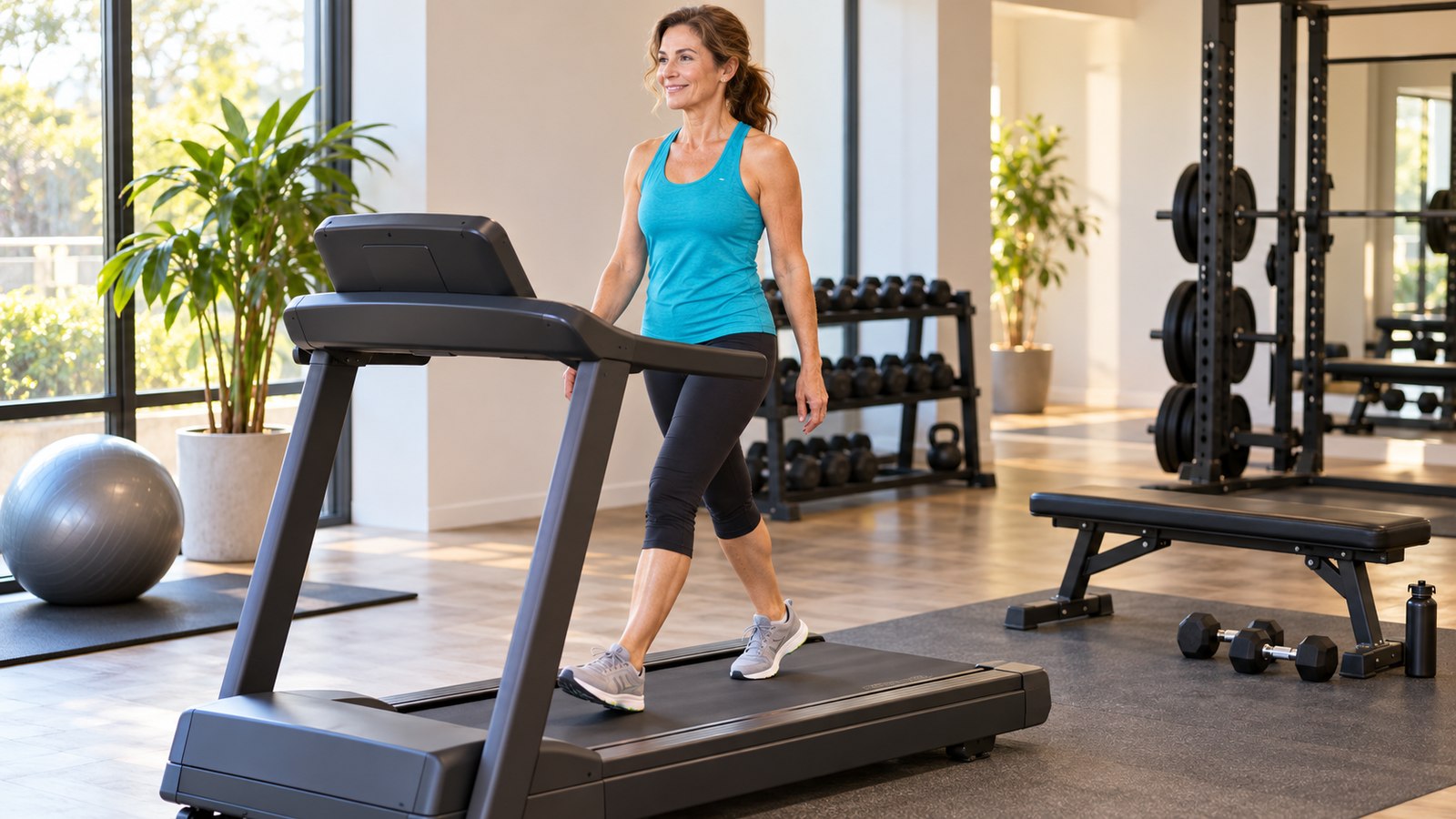
Is Incline Walking Zone 2 Cardio? Start With These Treadmill Settings
Incline walking is zone 2 cardio when it holds your heart rate at 60%-70% of your maximum, about 102-119 beats a minute at age 50. The treadmill setting is only a starting point; your heart rate and breathing decide.
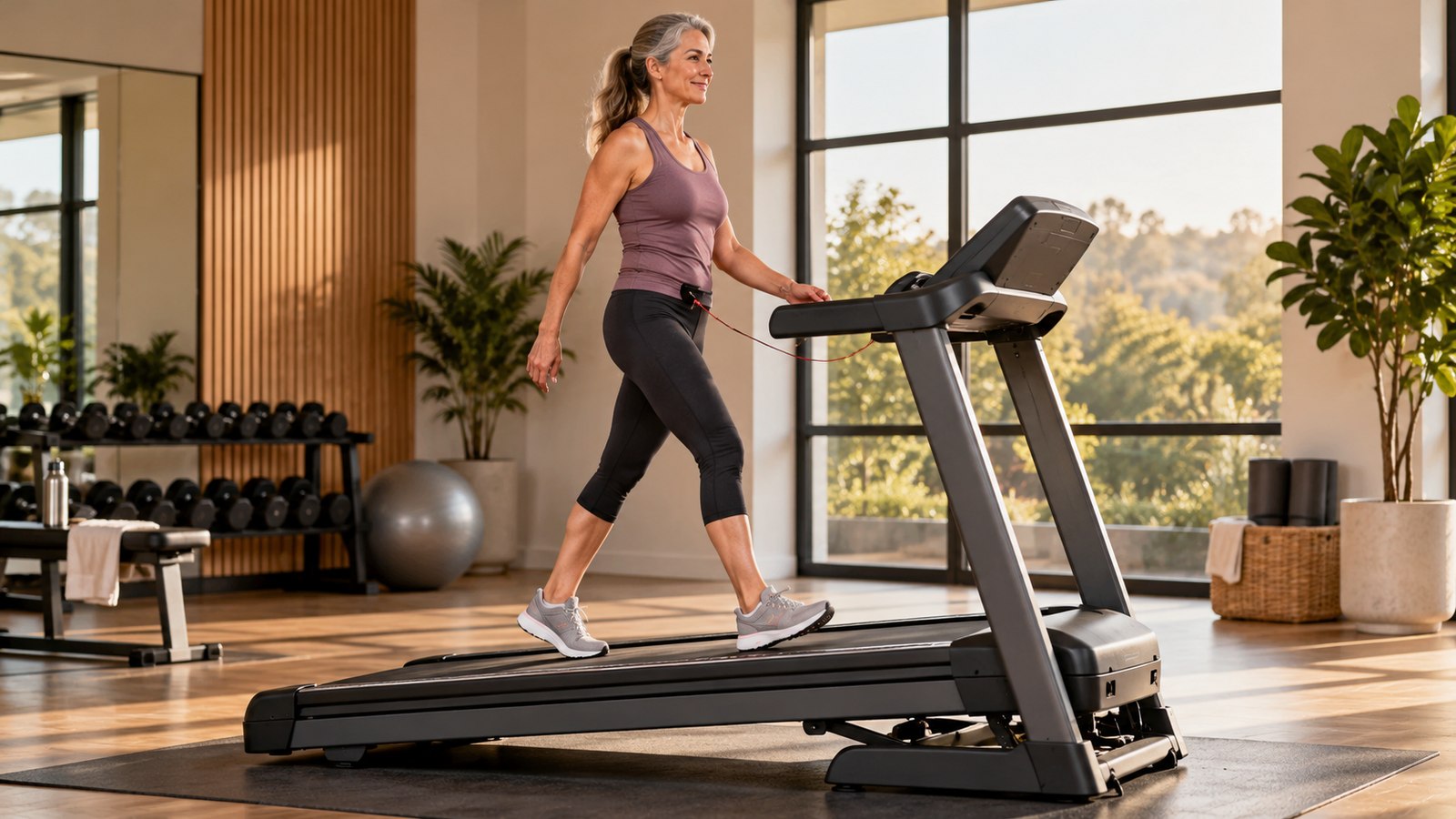
A treadmill grade of 8%-12% at 2.5-3.5 miles per hour (mph) typically places most adults in zone 2, according to Peak Primal’s treadmill guide. Zone 2 means 60%-70% of your maximum heart rate. For a 50-year-old, that’s roughly 102-119 beats a minute. So incline walking can be zone 2 cardio, but your own heart rate and breathing settle it, not the number on the belt display.
The Short Answer: Incline Walking Can Be Zone 2, but Not Automatically
The belt setting is only where you start. RingConn’s walking guide notes that an older adult or someone newer to exercise may reach zone 2 at a slower pace than a trained person. Two people on the same 8% grade can be in different zones.
- Verdict: If you can walk steadily on a treadmill, incline walking is a practical way to get zone 2 work without jogging.
- The catch, and its fix: the age-based numbers below come from the 220-minus-age formula, which the Steps blog calls a rough estimate. Check your breathing as well, using the talk test (how easily you can speak while you walk) in the heart-rate section.
- Strengths: you can “hit and sustain Zone 2 heart rate at a walking pace rather than a jog,” Peak Primal says, and the incline supplies the effort.
- Who should skip the steep belt: if moving or balancing is hard, talk to your health care provider before your first session (see the last section). A brisk walk on flat ground is the other route the physical therapist below names.
Stop the session if you feel dizzy, have chest pain or pressure, or feel nauseous. The National Institute on Aging (NIA) says aerobic activity should cause none of these.
Incline Raises Your Heart Rate Without a Faster Stride
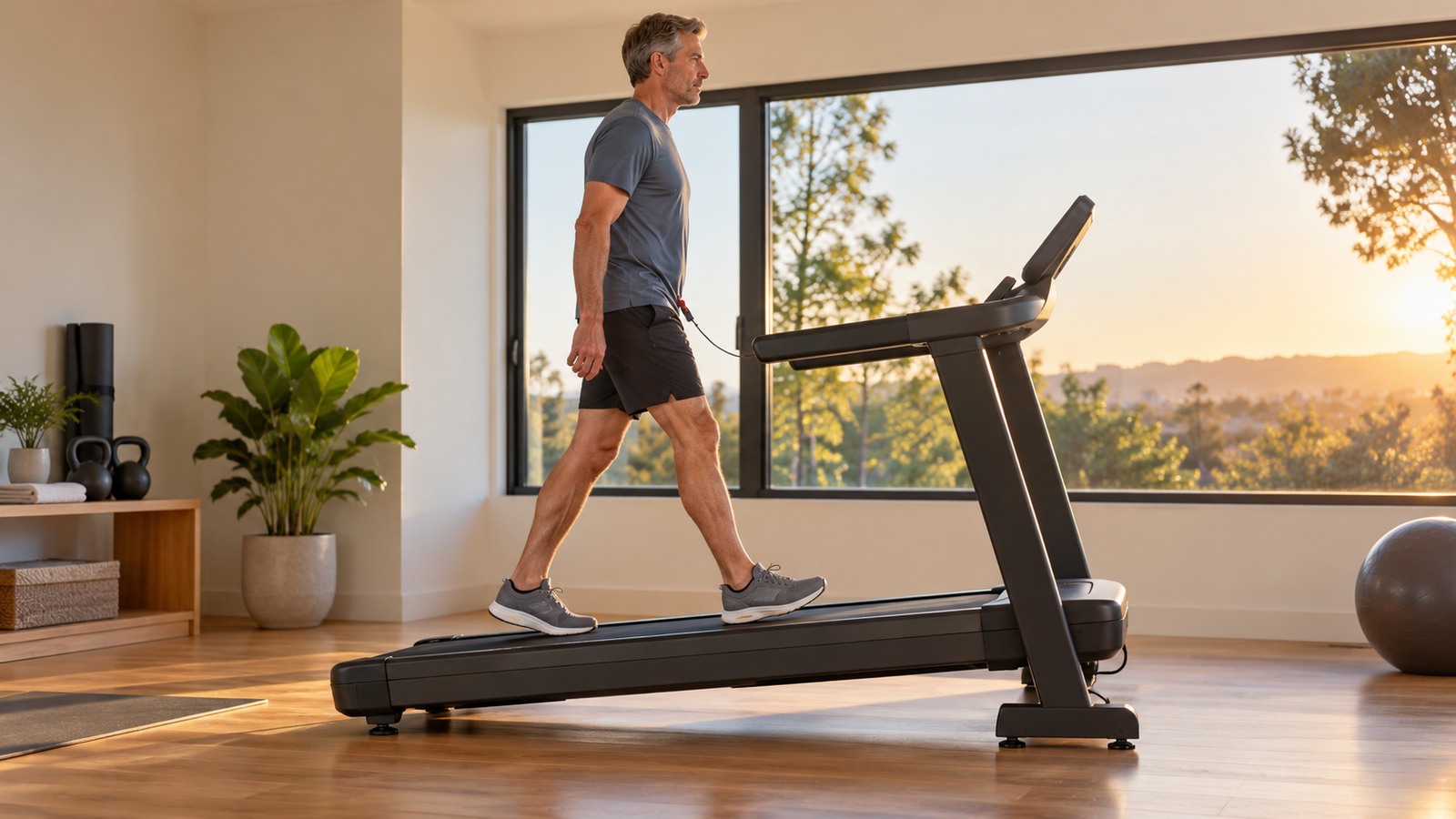
Tilting the belt raises cardiovascular demand without asking for a faster stride, per Peak Primal.
Winnie Yu, a Doctor of Physical Therapy (DPT) and Certified Strength and Conditioning Specialist (CSCS), told Women’s Health that most people can walk in zone 2. Some will need “a brisk walk or an incline or hill walk” to get their heart rate high enough.
If you’re less fit, trainer Chris Adams suggests starting at a low incline and slow speed while keeping your heart rate at 60%-70% of your maximum. Adams gives no number for “low.” Peak Primal’s week-one start is 8%; go lower if you’re already above your band at that grade.
Zone 2 Is 60%-70% of Max Heart Rate: 102-119 Beats a Minute at 50
To estimate your maximum heart rate, subtract your age from 220. Women’s Health and the Steps blog both use this formula. Then take 60% and 70% of the result, in beats per minute (bpm).
| Age | Est. max heart rate (bpm) | Zone 2 low, 60% | Zone 2 high, 70% |
|---|---|---|---|
| 40 | 180 | 108 | 126 |
| 50 | 170 | 102 | 119 |
| 60 | 160 | 96 | 112 |
| 70 | 150 | 90 | 105 |
Worked example: 220 − 50 = 170; 170 × 0.60 = 102 bpm and 170 × 0.70 = 119 bpm.
The formula is rough, so use the talk test as a second check. In zone 2 you can still “speak comfortably in sentences,” per RingConn.
If you’re talking as easily as when you’re standing still, you’re below zone 2, per Women’s Health. If you “can only say a few words before you have to take a breath,” the NIA calls the activity vigorous, which is harder than zone 2.
See also: what zone 2 cardio heart rate is over 40, and why formulas can be 28 bpm apart, and is 20 minutes of cardio enough? The talk test tells you mid-workout.
Heat, Hydration and Recovery Change Your Heart Rate on the Same Walk
RingConn lists seven things that can change your heart rate on the same walk: incline, hills, fitness, age, heat, hydration and how well recovered you are.
Age changes the formula’s estimate. In the table, the band drops 6-7 bpm per decade, from 108-126 at 40 to 90-105 at 70.
Heat, hydration and recovery can differ from one session to the next, so check all three before you start. The same 8% grade can read differently from one day to the next. Set the belt by your heart-rate band each session, not by last week’s numbers.
Your First Incline Zone 2 Session: A 7-Step Checklist
- Warm up with easy walking, as the NIA advises. Stop if you feel dizzy, have chest pain or pressure, or feel nauseous.
- Find your band in the table above: 60%-70% of maximum heart rate, the range Chris Adams gives for less-fit walkers. At 60, that’s 96-112 bpm.
- Set the belt at 8% and 2.5 mph as a first try. That’s the low end of Peak Primal’s 8%-12%, 2.5-3.5 mph range for most adults. If you’re already above your band there, start lower, as Adams suggests for less-fit walkers.
- Below your band, or talking as easily as when you’re still? Raise the incline toward 12%, the top of Peak Primal’s range. Incline adds demand without a faster stride, which matches Yu’s incline-or-hill advice in Women’s Health.
- Above it, or down to short phrases? The Steps blog puts short phrases at zone 3 or higher. Lower the incline or the speed until you can “speak comfortably in sentences,” RingConn’s zone 2 cue.
- Adjust for the day. If you’re hot, short on fluids or under-recovered, RingConn says your heart rate can respond differently. Your band may come at a different setting than last time.
- Hold it for at least 30 minutes, the session length Chris Adams gives, then cool down with easy walking, as the NIA advises.
Brisk Intervals and Stacked Incline Push the Walk Into Zone 2-3
Harder versions turn the walk into a different session. The Steps blog says alternating 3-minute brisk and 3-minute moderate segments, or stacking incline with a brisk pace, makes a 30-minute walk “solid Zone 2-3 cardio” rather than pure zone 2.
Peak Primal names drifting into zone 3 as the most common error. If your plan says zone 2, keep the incline and pace steady and let your heart-rate band decide when to ease off. Save intervals for a day you planned to work harder.
Check With Your Health Care Provider First if Moving or Balancing Is Hard
MedlinePlus advises checking with your health care provider before you start, especially if you have trouble moving or balancing, or you “worry that exercise might not be safe for you.” Balance matters on a tilted, moving belt, so have that conversation before your first 8% session.
Next step: once your sessions feel steady, read why zone 2 training is important for lifters over 40.
FAQ
What Treadmill Speed Should a Beginner Start At?
Try 2.5 mph at an 8% grade, the low end of Peak Primal’s range, then let your heart rate guide changes. The Steps blog gives 2.8-3.3 mph for beginners, but that table lists no incline, so it doesn’t compare directly with an 8%-12% grade. If you’re above your band at 2.5 mph and 8%, start lower on incline or speed, as Chris Adams suggests.
How Many Incline Sessions Should I Do in Week One?
Peak Primal suggests three 30-minute sessions at an 8% grade in the first week. That’s 3 × 30 = 90 minutes, or 60% of the at least 150 weekly minutes of moderate activity the NIA says to build up to.
Does an Outdoor Hill Walk Count?
Yes, if your heart rate says so. Winnie Yu, DPT, CSCS, the physical therapist quoted by Women’s Health, lists a hill walk next to brisk and incline walking. Hills are also on RingConn’s list of things that change your heart rate, so watch your monitor on the climbs.
This article is general information from public health sources, not medical advice. If you have a health condition, or any symptom during exercise, check with a clinician before you start or continue.
Sources
- https://peakprimalwellness.com/blogs/wellness/zone-2-training-on-a-treadmill-the-complete-science-guide
- https://www.womenshealthmag.com/fitness/a64476093/is-walking-zone-2-cardio/
- https://ringconn.com/blogs/guides/zone-2-walking
- https://www.chrisadamspersonaltraining.com/inclinewalkingonthetreadmill
- https://getsteps.app/blog/walking-for-cardio
- https://www.nia.nih.gov/health/exercise-and-physical-activity/four-types-exercise-can-improve-your-health-and-physical
- https://medlineplus.gov/exerciseandphysicalfitness.html