What Is Zone 2 Cardio Heart Rate Over 40? Formulas Can Be 28 Bpm Apart
At age 50, the percent-of-max method puts zone 2 at 102–119 bpm, while the heart-rate-reserve method gives 121–146 bpm with a resting pulse of 60. From age 40 to 70, the reserve range tops out 25–28 bpm higher, so a talk test checks either one without a watch.

Your zone 2 range depends on which formula you use.
So what is zone 2 cardio heart rate in real numbers? At age 50, the percent-of-max method gives 102–119 beats per minute (bpm). With a resting pulse of 60, the heart-rate-reserve method gives 121–146 bpm. From age 40 to 70, at that same resting pulse, the reserve range starts 18–20 bpm higher and tops out 25–28 bpm higher.
A lower resting pulse narrows the gap. A talk test checks either range without a watch.
Before you start, MedlinePlus advises checking with your health care provider. This matters most if you have trouble moving or balancing, or worry that exercise may not be safe for you.
Zone 2 feels like breathing harder while you can still talk in full sentences
Cleveland Clinic describes zone 2 training as moderate-intensity aerobic exercise that lifts your heart rate only “a wee bit.” That puts it at the gentle end of aerobic activity, which the National Institute on Aging (NIA) describes as activity that raises your breathing and heart rate.
How it feels is the useful part. Defined Fitness says your breathing speeds up in zone 2, but you can still speak in full sentences for most of the workout. If you are down to a few words at a time, you have gone past that.
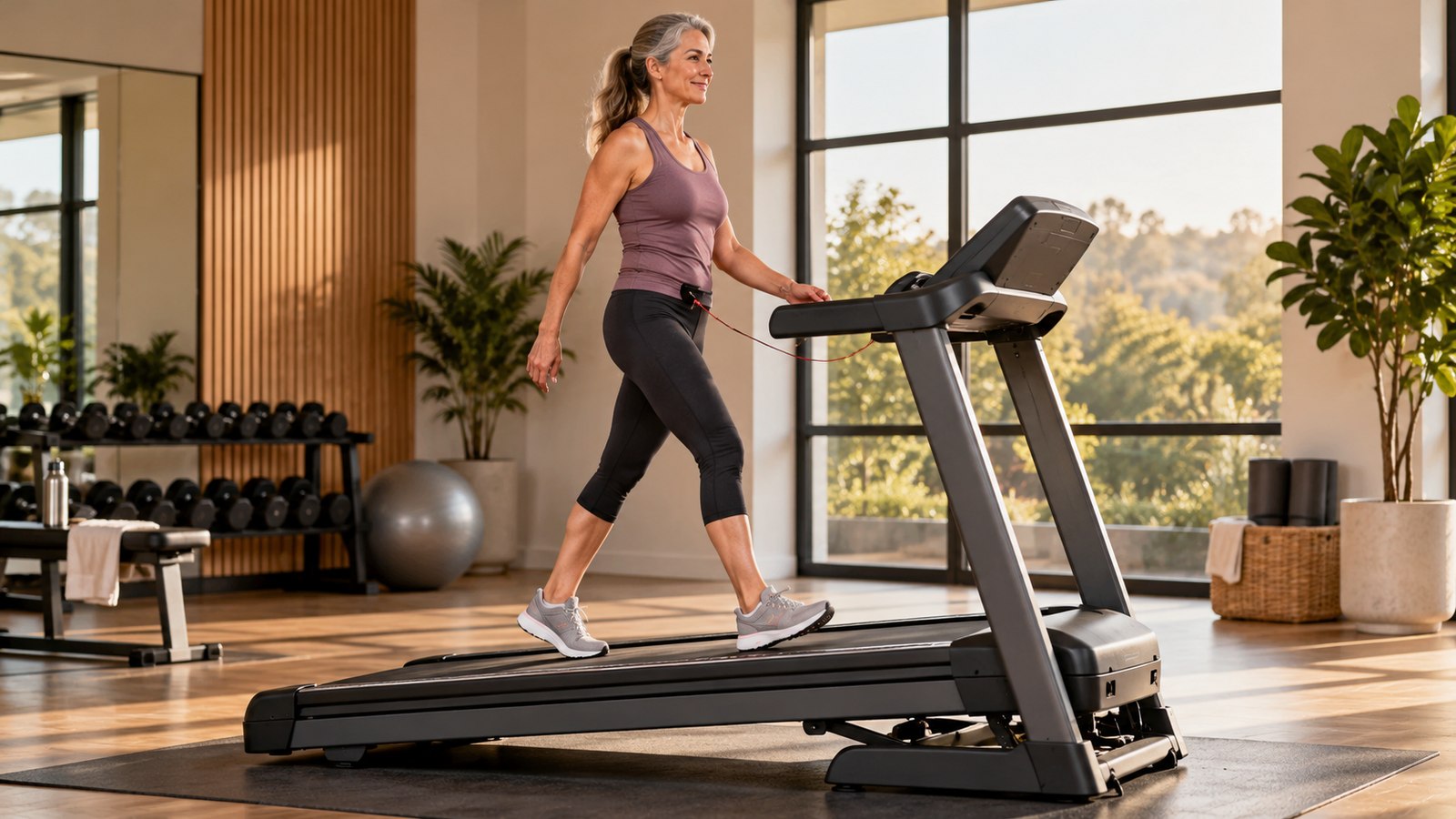
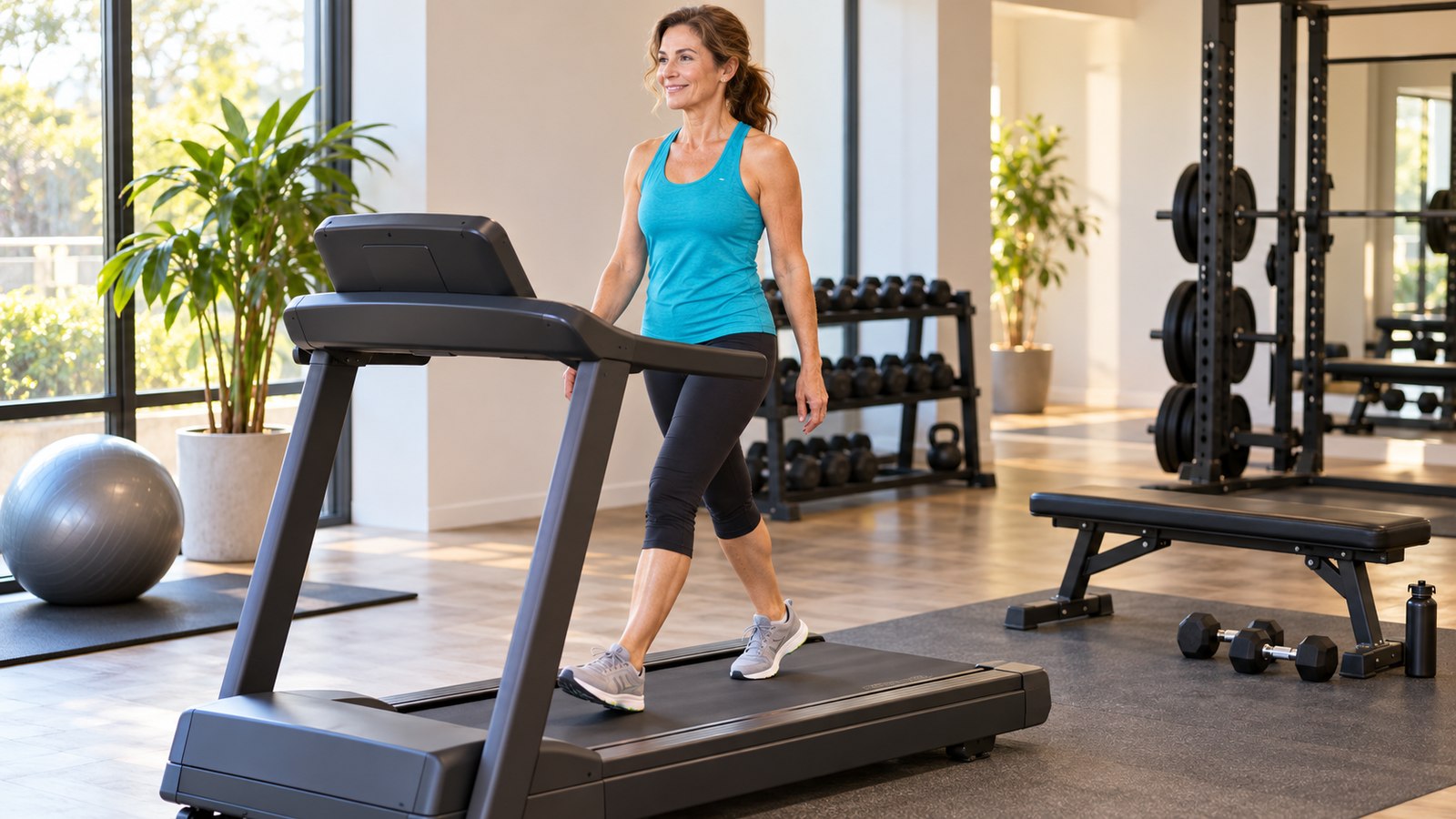
No watch? Use a walking pace as your starting point. Cleveland Clinic puts a brisk walk at a mile on flatter ground in 15 to 20 minutes. Sweat gives a brisk walking pace of about 5 to 6.5 km/h.
McMillan’s range sits higher: it adds your resting pulse back and uses a wider 6-zone band
Both methods start from your maximum heart rate. Sweat gives the common estimate: 220 minus your age. For a 50-year-old, that is 170.
- Percent of max. On the 5-zone system, zone 2 is 60–70% of maximum heart rate, according to Sweat. Polar, the heart rate monitor maker, describes zones the same way, as set percentages of your max. Multiply your max by 0.60 and by 0.70.
- Heart rate reserve (HRR). Your reserve is your max minus your resting pulse. It counts the beats you have available above rest. In McMillan’s 6-zone system, zone 2 is 55–78% of reserve. Take those shares of your reserve, then add your resting pulse back on.
Two things make the numbers differ. First, resting pulse: the percent-of-max method ignores it, while the reserve method counts up from where your heart already sits. Second, the band: McMillan’s zone 2 comes from a 6-zone system and spans 55–78%, against Sweat’s 60–70% on a 5-zone system.
At age 40 with a resting pulse of 60, the top gap is 0.08 x 180 = 14.4 bpm from the higher 78% ceiling plus 0.22 x 60 = 13.2 bpm from resting pulse, 27.6 in all, which the table rounds to 28. At the bottom, resting pulse adds 0.45 x 60 = 27 bpm and the lower 55% floor takes 0.05 x 180 = 9 bpm back, leaving 18.
At a resting pulse of 60, the reserve range starts 18–20 bpm higher and ends 25–28 bpm higher from 40 to 70
The table works out both methods at four ages. Max heart rate is 220 minus age. The reserve column uses an example resting pulse of 60 bpm. Figures are rounded to the nearest beat.
Age 50, worked: max = 220 − 50 = 170, so Sweat’s 60–70% of max = 170 x 0.60 to 170 x 0.70 = 102–119 bpm; reserve = 170 − 60 = 110, so McMillan’s 55–78% of reserve = 110 x 0.55 + 60 = 121 to 110 x 0.78 + 60 = 146 bpm.
| Age | Max HR (220 − age) | 60–70% of max | 55–78% of reserve, resting 60 | Gap: bottom / top |
|---|---|---|---|---|
| 40 | 180 | 108–126 bpm | 126–154 bpm | 18 / 28 bpm |
| 50 | 170 | 102–119 bpm | 121–146 bpm | 19 / 27 bpm |
| 60 | 160 | 96–112 bpm | 115–138 bpm | 19 / 26 bpm |
| 70 | 150 | 90–105 bpm | 110–130 bpm | 20 / 25 bpm |
The two ranges only touch at 40. There, the top of the percent-of-max range and the bottom of the reserve range are both 126 bpm. From 50 on, they do not overlap at all.
Your own resting pulse changes the reserve column and nothing else. Each extra 10 bpm of resting pulse = 10 x 0.45 = 4.5 bpm more at the bottom and 10 x 0.22 = 2.2 bpm more at the top of McMillan’s range. At age 50 with a resting pulse of 70: reserve = 170 − 70 = 100, so 100 x 0.55 + 70 = 125 to 100 x 0.78 + 70 = 148 bpm.
A resting pulse under 60 lowers the range by the same amounts, so each 10 bpm below 60 narrows the gap by 4.5 bpm at the bottom and 2.2 bpm at the top.
With a gap this big, Defined’s talk test matters because it checks how hard you are actually working, not a formula.
The talk test is your no-gadget check when the two columns disagree
Do it once you have settled into an easy session:
- Find a pace that feels easy, walking or pedaling.
- Say a few full sentences out loud. In zone 2, Defined says you can manage full sentences for most of the workout.
- Try McMillan’s stricter version: talk for 30 seconds without your breathing forcing a pause.
- If you wear a monitor, note your heart rate and which column of the table it falls in.
- If you cannot finish your sentences, slow down. By Defined’s description, you have gone past zone 2.
Here is the limitation. Both columns are estimates. They both rest on 220 minus age, which Sweat gives as the general way to estimate max. It is not a reading of your own heart.
McMillan calls the talk test the most reliable real-world check. So start with the lower, percent-of-max numbers. MedlinePlus advises building up your activity slowly rather than pushing hard all at once. Move toward the reserve numbers only while you can still pass the talk test.
To plan how many sessions to build up to, see how much zone 2 cardio to do per week after 40.
Walking, cycling or swimming all count; cycling is the low-impact pick
Sweat lists running, walking, cycling and swimming as zone 2 options. Pick the one you can keep easy for the whole session.
- Walking is the simplest way to start, and the paces above give you a target with no gadget. Stick to flatter ground at first, since that is what Cleveland Clinic’s pace assumes.
- Cycling suits sore joints. Sweat calls it particularly useful for niggly joints because it is low-impact.
- Running counts. If even a slow jog stops you finishing sentences, walk instead.
- Swimming also counts, per Sweat’s list.
Zone 2 heart rate questions
Can I use a measured max heart rate instead of 220 minus age? Yes. Both formulas start from max heart rate, so a measured max replaces 220 minus age in every line above. You can do the sums by hand or enter your numbers in McMillan’s zone 2 calculator.
Do women use the same formulas? Sweat’s max estimate takes only your age, and McMillan’s calculator asks only for age, resting heart rate and an optional measured max. If you know your measured max, use it, as in the answer above.
Is zone 2 all the exercise I need? The National Institute on Aging covers aerobic activity as one of several types of exercise. For the strength side, see what free strength training guidelines for over-40s cover.
Related reading: How long should i do zone 2 cardio.
Aerobic activity should not cause dizziness, chest pain or nausea
If the MedlinePlus advice at the top applies to you, take the table to that appointment with your resting pulse filled in. That way your provider sees the exact numbers you plan to train at. During any session, keep this warning from the National Institute on Aging in mind: aerobic activity “should not cause dizziness, chest pain or pressure, or nausea.” NIA’s advice is to listen to your body.
If a session brings any of these, talk with your doctor.
Not medical advice. This guide summarizes public health and training sources.
Sources
- https://health.clevelandclinic.org/zone-2-cardio
- https://www.mcmillanrunning.com/zone-2-heart-rate-calculator/
- https://defined.com/what-is-zone-2-cardio/
- https://sweat.com/blogs/fitness/zone-2-cardio
- https://www.polar.com/en/guide/heart-rate-zones
- https://www.nia.nih.gov/health/exercise-and-physical-activity/four-types-exercise-can-improve-your-health-and-physical
- https://medlineplus.gov/exerciseandphysicalfitness.html