Lifters Over 40: How Much Zone 2 Cardio After Lifting Is Enough?
Lift first, then ride a bike or walk on an incline for 20 to 30 easy minutes. Two to three sessions a week gets most of the benefit, and three to four is the ceiling for most lifters.
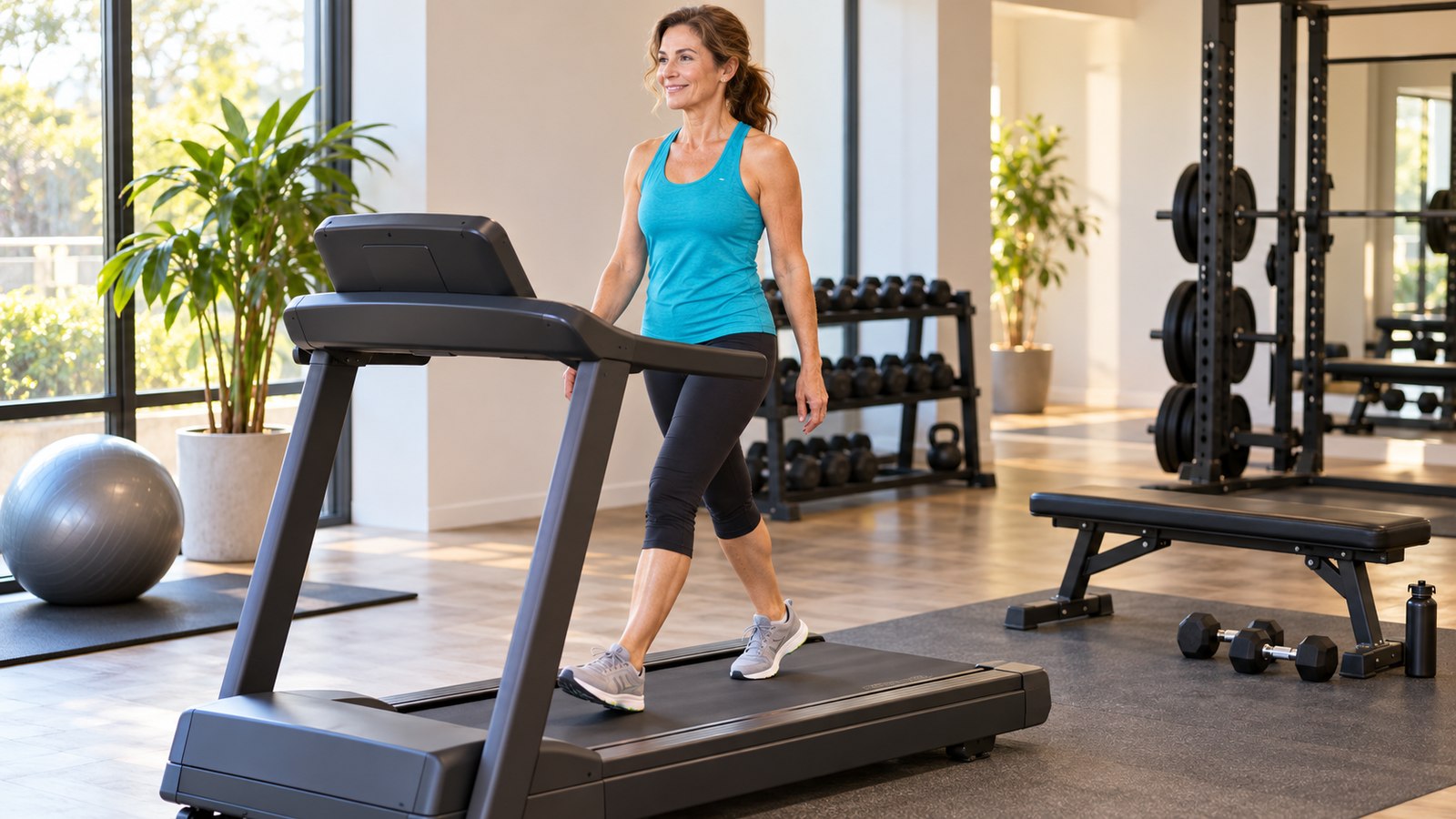
Put the barbell first, then do your zone 2 cardio after lifting as the easy part. For the cardio, the starting dose from Reshape, a fitness app’s blog is a 20- to 30-minute easy ride or incline walk. Do two or three of those a week and you add 40 to 90 minutes of easy aerobic work without an extra trip to the gym.
Zone 2 is steady aerobic work kept below the point where breathing gets hard and conversation breaks down, as Body Motion Lab, a training blog, defines it.
Stop signs: the National Institute on Aging (NIA) says aerobic activity should not cause dizziness, chest pain or pressure, or nausea. If one shows up, end the session. NIA also says to talk with your doctor if you are unsure about a particular activity.
Verdict: Post-Lift Zone 2 Fits a Strength Goal but Falls Short of 150 Minutes
- Verdict: Easy cardio after lifting suits a lifter over 40 whose first goal is strength and who wants aerobic work without extra gym trips.
- The flaw: two or three post-lift sessions of 20 to 30 minutes add up to 40 to 90 minutes a week. NIA, the federal research agency on aging, suggests building up to at least 150. Fix: keep two post-lift sessions at 30 minutes and add two 45-minute sessions on non-lifting days: 2 x 30 + 2 x 45 = 150 minutes. Four sessions is the top of the three-to-four ceiling from The Barbell Box, which sets each session at 30 to 45 minutes.
- Strengths: it keeps your lifting sharp, it uses low-impact machines, and it fits into a session you already planned.
- Who should skip: if endurance matters more to you than strength, Body Motion Lab flips the order: “zone 2 first, lift later or on another day.”
Lift First, Then Zone 2, When Strength Is the Goal
If strength comes first, lift first. Body Motion Lab warns that a long cardio session before lifting can lower bar speed and make your technique sloppier. Bar speed is how fast the bar moves on each rep. Slower reps at the same weight mean fatigue is eating into the set.
Easy cardio in a lifting week doesn’t appear to cost you strength, as long as your lifting volume stays the same. Reshape recommends a short, easy bike ride or walk after lifting rather than before it.
Reshape cites a 2022 Sports Medicine review. Across 43 studies, lifting plus cardio did not reduce maximal strength or muscle growth compared with lifting alone, when lifting volume was matched. Reshape adds one caveat. If explosive performance is your priority, doing both in one session can be more disruptive than splitting them at least 3 hours apart.
Keep the Post-Lift Session Short: 15 to 30 Easy Minutes
Body Motion Lab puts zone 2 after lifting at 15 to 30 minutes. Reshape’s starting dose on a bike or incline walk is 20 to 30. Morpheus, a heart-rate training app, lists a short zone 2 session after lifting as a conditioning option during strength phases. A strength phase is a block of weeks built mainly around getting stronger.
Body Motion Lab’s rule for easy: “If your zone 2 session feels like a test, it is probably not zone 2.” The talk test gives you a check mid-session. Reshape says your breathing should be clearly up while you can still speak in full sentences. If you have to pause for breath to speak, ease off the speed, incline or resistance.
Start at the low end of those ranges. Reshape says to “add time only if leg recovery and lifting progression remain solid.”
Bike or Incline Walk After Leg Day; Run on Other Days
Reshape calls cycling and incline walking sensible ways to manage fatigue. It says high-impact running may be harder to layer onto hard leg training. IFPA, the International Fitness Professionals Association, says zone 2 often fits best on non-lifting days, or after lifting as a short, controlled session.
| Mode | After leg day? | Starting dose (min) | Source |
|---|---|---|---|
| Stationary bike | Yes: a fatigue-management option | 20-30 | Reshape |
| Incline walk | Yes: a fatigue-management option | 20-30 | Reshape |
| Run | Harder to layer onto hard leg training; use a non-lifting day | Not given | Reshape, IFPA |
Two to Three Sessions a Week Gets Most of the Benefit; Three to Four Is the Ceiling
The Barbell Box, a lifting site, says two to three zone 2 sessions a week gets most of the benefit. It sets each session at 30 to 45 minutes. For most lifters, it puts the ceiling at three to four: “Past that, recovery competes with lifting.”
On that plan, 2-3 sessions x 30-45 min = 60-135 min a week. At Reshape’s post-lift dose, 2-3 sessions x 20-30 min = 40-90 min.
Two to three sessions is enough to build aerobic capacity without eating into your lifting recovery, per The Barbell Box. It falls short of NIA’s 150 minutes, because even 3 x 45 is 135. To reach 150, add rest-day sessions up to the four-session week in the verdict.
Your Watch’s Heart Rate During Lifting Is Not Zone 2 Training
Your watch may show zone 2 during squats, but that doesn’t make the squats zone 2 training. Lifehacker puts it plainly: “Heart rate zones only apply to cardio.” Count the bike or walk after lifting toward your week, and leave the lifting minutes out.
If your watch’s zones look off on cardio too, read Apple Watch Zone 2 Cardio Uses Resting Heart Rate – Your App May Not.
Warm Up and Cool Down With Easy Walking; Stop for Dizziness, Chest Pain or Nausea
NIA recommends a little light activity, such as easy walking, before and after aerobic exercise. After a lifting session, that means some easy walking once the ride or incline walk ends.
Post-Lift Zone 2 Checklist: One Session, Start to Finish
- Warm up with 5-10 minutes of easy cardio, the amount Body Motion Lab calls fine before lifting.
- Lift your planned session first if strength is the goal.
- After a leg day, pick the bike or incline walk (Reshape).
- Ride or walk for 20-30 minutes, and slow down if it starts to feel like a test (Body Motion Lab).
- Cool down with a little easy walking (NIA).
- Log only the cardio block, not the zone 2 reading from your sets (Lifehacker).
- Count the week: 2-3 post-lift sessions x 20-30 min = 40-90 min (Reshape, The Barbell Box).
Next step: find your own heart-rate range before your first session with What Is Zone 2 Cardio Heart Rate Over 40?
Zone 2 After Lifting: Questions Lifters Ask
Can I Do Any Cardio Before Lifting?
Yes, a little. Body Motion Lab says 5 to 10 minutes of easy cardio before lifting is fine as a warm-up. The problem is a long session that slows the bar.
Do Rest-Day Sessions Count Toward the Weekly Limit?
Yes. The Barbell Box sets three to four sessions as a weekly ceiling, so a ride on a rest day and a ride after lifting each count as one.
What If I Only Have 15 Minutes After Lifting?
Use them. Body Motion Lab’s post-lift range starts at 15 minutes. Keep the pace easy enough to speak in full sentences.
This article is general information from public health and training sources, not medical advice.
Sources
- https://bodymotionlab.com/blog/zone-2-cardio-and-strength-training-recovery
- https://www.reshapeapp.ai/blog/zone-2-cardio-guide-for-lifters
- https://www.ifpa-fitness.com/blog/zone-2-cardio-explained-how-hard-how-long-and-why
- https://thebarbellbox.com/blogs/news/zone-2-cardio-for-lifters
- https://support.trainwithmorpheus.com/support/solutions/articles/4000226786-how-to-pair-weight-training-with-zone-2-and-hiit-based-on-your-primary-goal
- https://lifehacker.com/health/strength-training-isnt-zone-2-exercise
- https://lifehacker.com/health/cardio-before-or-after-lifting-weights
- https://www.nia.nih.gov/health/exercise-and-physical-activity/four-types-exercise-can-improve-your-health-and-physical