Don't Buy Creatine Until You Know the Dose Women Over 40 Should Take
Creatine is worth raising with your doctor if you're over 40 and strength training, but these sources don't show every woman needs it. The standard dose is 3-5g a day; 8-10g is a newer conference proposal.
The usual scoop is small: 3 to 5 grams (g) a day, according to Ubie’s Doctor’s Note and Carolina Integrative Wellness. Carolina also describes an optional loading phase, a higher starting dose: 20g a day for 5 to 7 days.
The 10g figure is newer. Women’s Health UK credits the 8-10g proposal to two researchers speaking at an industry conference. So should women over 40 take creatine? If you strength train, these sources support raising it with your doctor.
They don’t show that every woman needs it, or that 10g beats 5g.
Take the checklist near the end to your doctor or pharmacist before your first dose.
Verdict: Worth Raising With Your Doctor, Not a Must for Every Woman
Verdict: Creatine is a reasonable add-on to discuss if you’re over 40 and doing strength training. The evidence supports having that conversation. It doesn’t settle the dose.
The flaw, and its fix: The closest study group here is post-menopausal women aged 63 to 75, in the 2021 review Women’s Health UK describes. Those results don’t directly answer dosing for women in their 40s. Fix: ask your clinician whether the cited 3-5g range applies to you, and leave any higher dose to them.
Strengths: A 2014 meta-analysis found older adults gained more strength and muscle mass when they took creatine during resistance training, per Carolina Integrative Wellness. In the 2021 review, women on creatine and resistance training added fat-free mass and improved leg press and bench press strength, per Women’s Health UK.
Who should skip for now: If you have kidney or liver disease, or take related medicines, Ubie’s Doctor’s Note says to check with a doctor first. Start with the strength work below, which needs no supplement.
Creatine Is Mostly Stored in Muscle, and Women Start With Less
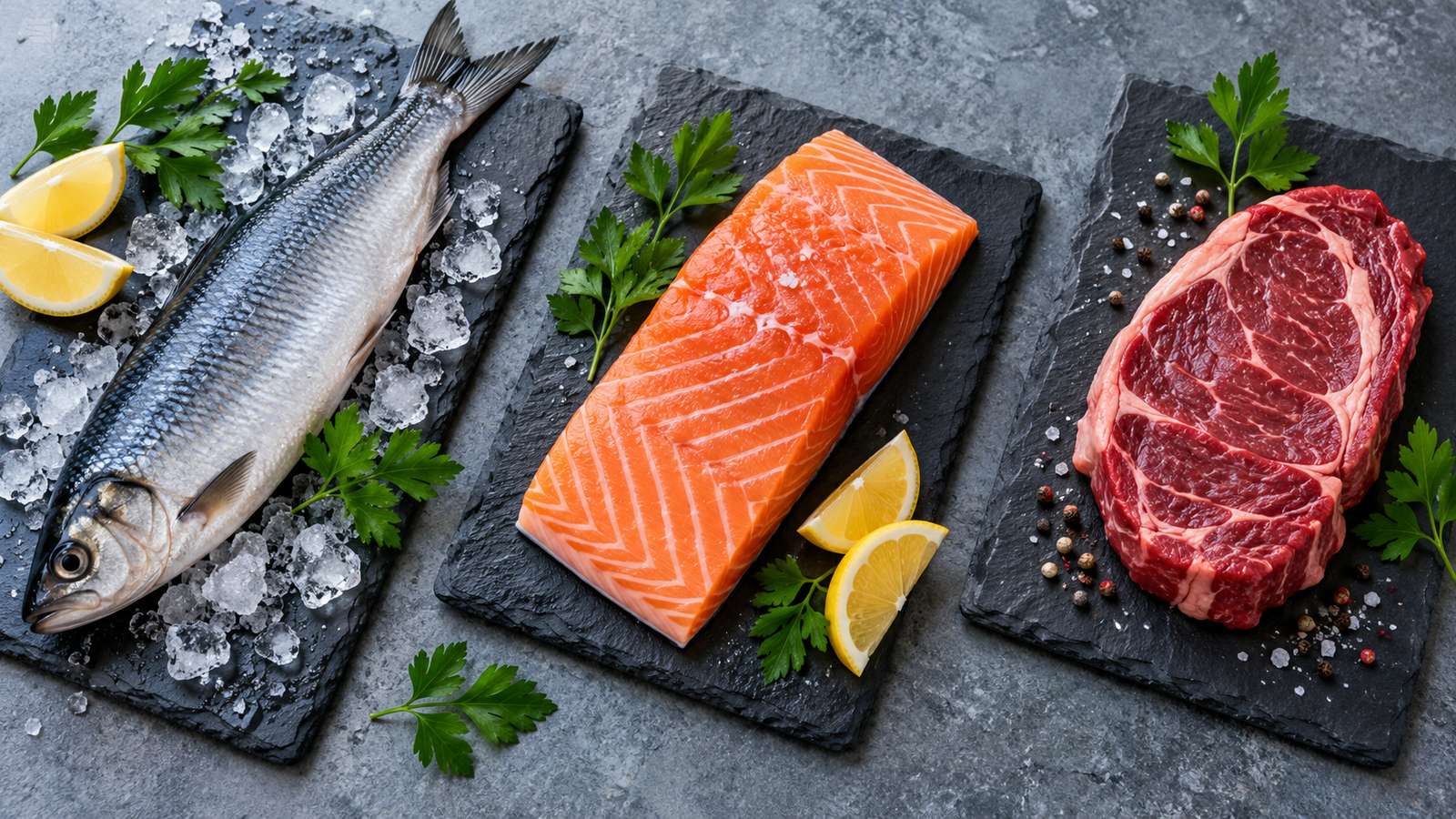
About 95% of your body’s creatine sits in muscle, where it helps make energy for quick, powerful movements, according to Carolina Integrative Wellness. You get small amounts from red meat and seafood. Your liver, kidneys and pancreas also make it, per the same source.
Women may start lower: they naturally store 70% to 80% less creatine than men, according to EatingWell.
Adults lose about 3-8% of muscle mass per decade, starting in their 30s and speeding up after 40, per Ubie’s Doctor’s Note.
If you already track meat and fish for protein per day for women over 40, those same foods are where food creatine comes from.
The Research Case Comes From Older Adults, Not Women in Their 40s
The main paper behind the midlife case is a 2019 Journal of Clinical Medicine review by Candow, Forbes, Chilibeck, Cornish, Antonio and Kreider, cited by EatingWell. Its title states its aim: aging muscle and bone, with a “Focus on Falls Prevention and Inflammation.”
Two more papers sit behind it:
- A 2014 meta-analysis by Candow, cited by Carolina Integrative Wellness. A meta-analysis pools the results of earlier studies.
- A 2021 review covering post-menopausal women aged 63 to 75 who took 0.3g per kilogram (kg) of body weight alongside resistance training, cited by Women’s Health UK.
Candow leads both the 2014 and 2019 papers. Kreider, a 2019 co-author, is also one of the two researchers behind the 8-10g proposal below. Read these as connected work, not as separate confirmations.
The rest is personal experience. A trainer quoted by Women’s Health UK says she has taken creatine monohydrate for more than six years. She recommends it to clients, especially women over 40. That’s one person’s account, not a trial.
Standard Dose Is 3-5g; 8-10g Is a Newer Proposal
Rows run from the smallest daily dose to the largest, with the weight-based study dose last.
| Source | Dose (g) | How often, phase or population | Link |
|---|---|---|---|
| Ubie’s Doctor’s Note | 3-5 | Daily; standard range | Ubie |
| Carolina Integrative Wellness | 3-5 | Daily dose | Carolina |
| Trainer quoted by Women’s Health UK | 5, then 10 | Daily; one person’s routine | Women’s Health UK |
| Kreider and Kleiner, SupplySide Global 2025 | 8-10 | Daily; proposal at an industry conference | Women’s Health UK |
| Carolina Integrative Wellness | 20 | Daily for 5-7 days; optional loading | Carolina |
| 2021 review | 0.3 per kg of body weight | No schedule given; post-menopausal women aged 63-75, with resistance training | Women’s Health UK |
The trainer’s switch is where many readers first meet 10g. She says she used to add one 5g scoop to her water, but “now the research is telling us to take 10g a day,” per Women’s Health UK. The same article credits “8-10g of creatine daily” to Richard Kreider and Susan Kleiner at SupplySide Global 2025.
The strongest support for going above 5g is a review Women’s Health UK cites. In it, “doses over 5g per day produced gains in leg press strength” in older adults. That quote doesn’t name 10g.
To see what a weight-based dose means, take a woman who weighs 70kg (about 154 pounds). That weight is only an example. At the 2021 review’s rate, her dose is 0.3g x 70kg = 21g (Women’s Health UK). That’s about four 5g scoops, and 7 times the 3g low end of the standard daily range (Ubie). Women’s Health UK gives no schedule for that amount, and it’s a study dose used with resistance training, not a label instruction.
Strength Training Comes First, and It Needs No Supplement
Creatine is pitched as support for strength work, and the 2021 review paired it with resistance training. So strength work comes first. The National Institute on Aging (NIA) has a guide to three types of exercise that improve health and physical ability.
MedlinePlus gives two places to start: strength moves using “your own body weight,” and balance work such as “standing on one leg.” It also says to “build up your activity level slowly” and to challenge yourself by “lifting slightly heavier weights.”
See also: Before You Buy a Strength Training Over 40 Book, See the $0 Version.
Check First If You Have Kidney or Liver Disease, a Fluid Limit or Regular Medicines
None of these sources puts all of these checks in one place. Go through them before your first dose, and take the list to your doctor or pharmacist.
- List every medicine and supplement. The National Institutes of Health’s Office of Dietary Supplements advises telling your doctor, pharmacist and other providers about every supplement and medicine you take (Office of Dietary Supplements). That lets them check for interactions. Put creatine on the list.
- Flag kidney or liver disease. Ubie’s Doctor’s Note says to talk to a doctor first if you have either, or take related medicines. Carolina Integrative Wellness also flags “kidney issues.”
- Check any fluid limit. Carolina Integrative Wellness says to “drink plenty of water” with creatine. If your doctor has told you to limit fluids, check with them before you drink more during sweaty sessions, says the NIA.
- Bring the dose question. Ask whether 3-5g fits you, and whether the 8-10g proposal reported by Women’s Health UK applies to you at all.
- Note your food sources. Say how often you eat red meat and seafood, the foods Carolina Integrative Wellness names as creatine sources. Ubie’s Doctor’s Note says muscle stores can decline with age, “especially in women who eat less red meat.”
- Learn the stop signs. MedlinePlus says to stop exercising and get help right away if you have pain, extreme shortness of breath or dizziness.
Next step: before you buy a tub, compare price per gram in Creatine for Men Over 40: Which Tub Runs Under 10 Cents a Gram?. The per-gram maths works the same for any buyer.
FAQ: Should Over 40s Take Creatine?
Is 10g a Day Better Than 5g for Women Over 40?
These sources don’t show that. A review Women’s Health UK cites found doses over 5g a day raised leg press strength in older adults, but it doesn’t name 10g. Ask your clinician before going above 3-5g.
Do You Need a Loading Phase?
No. Carolina Integrative Wellness lists 20g a day for 5 to 7 days as optional.
Can Food Alone Cover It?
Probably not. EatingWell says it’s “difficult to get enough creatine from food alone” to boost your body’s stores. Red meat and seafood contain only small amounts, and your body makes some too.
When Should You Check With a Clinician?
Check before your first dose if any of the six checks above applies to you. While exercising, stop and get help right away if any warning sign from check 6 appears.
This page is built from public health sources and is not medical advice.
Sources
- https://carolinaintegrativewellness.com/why-women-over-40-should-consider-creatine-supplementation/
- https://ubiehealth.com/doctors-note/creatine-benefits-women-over-40-science-27-start-x32e5
- https://www.eatingwell.com/creatine-for-women-over-40-11843879
- https://www.womenshealthmag.com/uk/food/a69617141/creatine-women-over-40-benefits-10g-research/
- https://ods.od.nih.gov/factsheets/VitaminD-Consumer/
- https://www.nia.nih.gov/health/exercise-and-physical-activity/four-types-exercise-can-improve-your-health-and-physical
- https://medlineplus.gov/exerciseandphysicalfitness.html